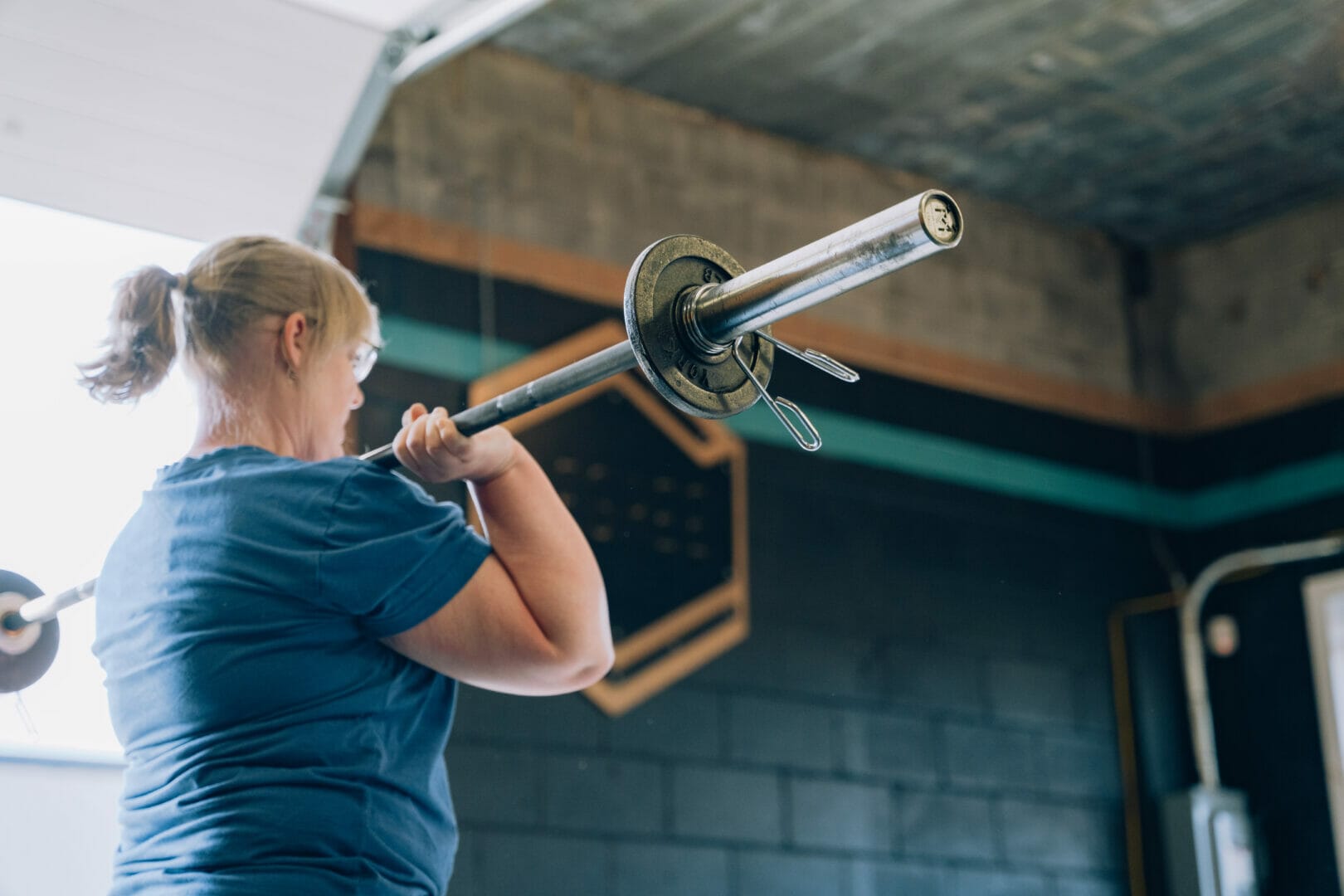
In a world full of shiny gym machines promising quick results with guided paths and padded seats, many lifters overlook the raw power of free weights. At our gym, we don’t have rows of selectorized machines. Instead, we stock dumbbells (DBs), kettlebells (KBs), barbells, plates, and boxes for jumps. Why? Because we believe the body is the machine—and training with free weights unlocks benefits that fixed-path equipment simply can’t match.
Don’t get me wrong: machines have their place, especially for absolute beginners or rehab. But if your goal is functional strength, better performance in daily life or sports, and a stronger, more resilient body overall, free weights deliver superior results. Here’s why.
1. Free Weights Recruit More Muscles—Including Critical Stabilizers
When you press a barbell overhead or swing a kettlebell, the weight isn’t locked into a fixed track. Your body must stabilize it in multiple planes of motion. This activates not just the prime movers (like your delts or quads) but also dozens of smaller stabilizer muscles in your core, shoulders, hips, and ankles.
- A dumbbell shoulder press forces your rotator cuff and core to work overtime to keep the weights balanced.
- A barbell back squat demands full-body coordination to prevent tipping.
- Kettlebell swings or Turkish get-ups build rotational stability and grip strength that machines ignore.
Machines, by contrast, often isolate muscles and do the stabilizing for you. This can feel easier and allow you to move more weight on that specific path—but it leaves gaps in overall strength and balance. Real life (carrying groceries, playing with kids, or reacting on the field) rarely happens on a fixed rail. Free weights better prepare you for it.
Studies back this up: while both methods build muscle and strength effectively, free-weight training often shows advantages in functional measures like leg strength and explosive power, with greater engagement of supporting muscles.
2. Greater Functional Strength and Real-World Transfer
Free weights mimic natural human movement. Barbells excel at heavy compound lifts (squats, deadlifts, presses) that build raw power. Dumbbells allow unilateral work to fix imbalances. Kettlebells add dynamic, ballistic options like swings and cleans that develop power and conditioning in one go.
Add box jumps to the mix, and you’re training explosive power through the stretch-shortening cycle—training your legs and nervous system to produce force quickly. This translates to better athleticism, faster sprints, higher verticals, and improved bone density from the impact.
Machines often limit range of motion and don’t challenge balance or coordination the same way. The result? Strength that looks good on a machine but doesn’t always carry over when you step into the real world. With our setup, every session builds strength you can use.
3. Better Hormone Response and Efficiency
Some research shows free-weight sessions can trigger a stronger acute hormonal response, such as greater increases in free testosterone in men compared to machine work. This may support muscle growth and recovery over time.
Plus, free weights are incredibly efficient. A few compound movements with a barbell and plates can hit your entire body in 45-60 minutes. No need to hop between a dozen machines. You get more bang for your buck—and more time back in your day.
4. Versatility and Scalability
Our gym’s tools are endlessly adaptable:
- Dumbbells: Perfect for unilateral work, accessory lifts, and rehab-style movements.
- Kettlebells: Ideal for swings, goblet squats, and flows that blend strength with cardio.
- Barbells and plates: The gold standard for progressive overload—add small plates and keep getting stronger.
- Box jumps: Build power without fancy equipment.
You can modify any exercise for your level (elevated, assisted, or heavier variations). Machines lock you into one movement pattern, often mismatched to your body’s unique levers.
5. Addressing the “Danger” Myth
A common objection: “Free weights are riskier than machines.” With proper coaching and progressive technique, the opposite is often true. Machines can create unnatural stress on joints if the seat or path doesn’t fit your body. Free weights teach control, mobility, and awareness.
Start light, focus on form (we emphasize this in every class), and the risk drops dramatically. The stabilizers you build actually protect your joints long-term. Many lifters find free weights feel more joint-friendly once they master the basics.
Who Benefits Most from Free-Weight Training?
- Athletes wanting explosive power and agility.
- Busy professionals seeking efficient, full-body workouts.
- Anyone over 40 looking to maintain bone density, balance, and daily function.
- People tired of feeling “stuck” on machines with limited progress in real strength.
Even beginners thrive here with guidance. The learning curve pays off quickly as you gain confidence moving your body through space.
Sample Free-Weight Workout to Get You Started
Try this full-body session (warm up first, focus on controlled reps):
- Barbell Back Squat – 4 sets of 6-8 reps (builds lower body power).
- Dumbbell Bench Press – 3 sets of 8-10 reps (hits chest with extra stabilizer demand).
- Kettlebell Swing – 3 sets of 15-20 reps (explosive hips and conditioning).
- Box Jumps – 3 sets of 6-8 reps (power development—step down to reduce impact if needed).
- Dumbbell Farmer’s Carry – 3 sets of 40-60 seconds (core, grip, posture).
Rest 60-90 seconds between sets. Progress weight or reps weekly.
Final Thoughts: Let Your Body Be the Machine
Machines can build muscle and strength—research shows they’re comparable for hypertrophy in many cases. But free weights offer something more: comprehensive development, functional carryover, and the satisfaction of truly mastering your body under load.
At our gym, we keep it simple with DBs, KBs, barbells, plates, and boxes because it works. No frills, just results. The body is the machine—strong, adaptable, and capable of amazing things when you train it that way.
Ready to ditch the guided paths and build real, usable strength? Drop by, grab a barbell, and let’s get to work. Your stronger, more capable self is waiting.
What’s your favorite free-weight move? Share in the comments!